|
But then the question is raised:
“Maa, when are you getting married?”
Welcome to
Bangladesh, where being a working
woman means you're expected to be
rich, but also a stay-at-home wife.
Get your degree, but don't be too
educated or you're "Shahbagi."
Contribute financially, but don’t
forget to do the dishes.
This is what it's really like. I’m
writing about the jobs we get, what
we earn, the discrimination that's
too polite to call itself
discrimination, and whether any of
this is actually sustainable.
The Double Life Nobody Talks About
Get Educated (But Not Too Much).
Growing up here, education gets
pushed hard. Finish your HSC. Get
into a good university. Preferably
medical, BUET, or a public
university. Because it raises your
marriage value. Yeah, you read that
right. Marriage value.
But there's a cap on how far you
should go. If you push too hard
academically, then suddenly you're
too independent.
Too difficult
to settle down. Lower class families
often discourage higher
education for women
with the attitude that they'll "go
to someone else's home anyway" (BRAC
Research), so why invest?
The female labor force participation
rate in Bangladesh is 44.15% as of
2024. Sounds decent until you
realize the world average is 51.13%
(World Bank).
And it gets worse. According to the
Bangladesh Labour Force Survey 2024,
the female workforce actually shrank
by 1.6 million in just one year,
dropping from 25.3 million in 2023
to 23.7 million in 2024. First time
since 2010 that the numbers went
backwards.
Education becomes this weird
performance. You're preparing for
employment, sure, but also for
marriage negotiations. The goal
isn't independence. It's
respectability.
Two Jobs, One Paycheck. Working
women in Bangladesh are expected to
manage two full-time lives. Career
woman by day. Tradwife by evening
and weekend.
Society acts like this is normal.
You contribute financially while
cooking, handling childcare,
managing emotional labor, and
maintaining
social obligations.
The workday ends. Your actual work
begins.
I've watched this happen too many
times with too many women around me.
Some choose jobs with predictable
hours. Others avoid leadership roles
(or are denied such roles) entirely
because they “can't sacrifice
household expectations.” Many of us
are raised to “just deal with it.”
Marriage Kills Careers (For Women
Only). Marriage is treated like a
risk factor for female employees.
I've been asked during Bangladeshi
job interviews if I'm unmarried.
Multiple times.
It feels routine to employers, but
we all know what’s going on in their
head. Even they know that married
women have
double responsibilities
to “give them full priority.” And if
they’re pregnant? Oh boy, you ain’t
getting that job. Male candidates
never get asked this.
Research shows that impacts on
female employment diminish over
time, and married
women experience
smaller short-term impacts and
larger long-term reductions than
unmarried women.
Some women leave careers
voluntarily. Most are pushed out
through lack of childcare,
relocation pressure, or just the
exhausting impossibility of doing
both jobs well. Paid or maternity
leaves are a luxury better not named
in this country.
Where Women Actually Work? The
"Safe" Professions.
Teaching is huge. It's socially
acceptable, respectable, and
compatible with family life.
Teachers earn between 12,000 and
35,000 BDT monthly (110 to 320 USD).
Private university lecturers make
more, but those positions are
limited.
It's stable work. Upward mobility is
limited. Most women accept this
tradeoff because it comes with
family support and social approval.
When you ask what jobs do women
commonly
work in Bangladesh,
teaching always tops the list.
Healthcare attracts women too,
especially nursing and medical
practice. Female doctors are
increasingly common in gynecology
and pediatrics.
Nurses earn 15,000 to 40,000 BDT
(135 to 365 USD). Entry-level
doctors make 30,000 to 70,000 BDT
(270 to 640 USD).
Despite their medical degrees and
expertise, patients from less
educated backgrounds often refer to
female doctors as nurses. The
confusion isn't accidental. It's
gendered respect, or the lack of it.
Corporate and Banking.
Corporate jobs offer higher pay and
prestige. Entry-level salaries range
from 20,000 to 60,000 BDT (180 to
550 USD).
Better earning potential than
teaching or healthcare. But the
higher end isn’t usually reserved
for women.
Bangladesh’s gender discrimination
in workplace issues are more visible
here. Promotion bias is real.
Leadership barriers are real.
Corporate leadership remains heavily
male-dominated. Women struggle to
move from mid-level to executive
roles.
In fact, 76% of respondents in the
2018 Bangladesh World Value Survey
agreed that "men should have more
rights to a job than women," and 67%
agreed that "men make better
business executives than women".
Laws in Bangladesh don't prohibit
gender-based discrimination. They
don't mandate equal pay. So this
bias isn't just cultural. It's
legal.
Garment Factories.
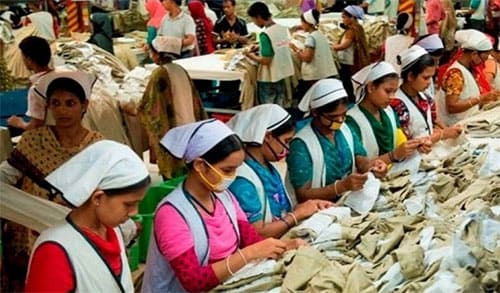
The garment industry employs
millions of women. It's one of the
largest female employment sectors in
the country. Workers earn 8,000 to
15,000 BDT (70 to 135 USD). That's
extremely low even by local
standards. But it supports families.
It gives rural women financial entry
points.
The conditions, though. A study
found that 22% of garment workers
reported experiencing frequent
sexual harassment
inside factories in the past 6
months, mainly by male co-workers,
supervisors, security guards, and
factory owners.
The harassment comes from
everywhere. And despite a 2009 High
Court directive to prevent workplace
sexual harassment, measures to
protect workers from gender-based
violence and harassment are absent
in employment regulation, and
directives have not been implemented
effectively.
Freelancing.
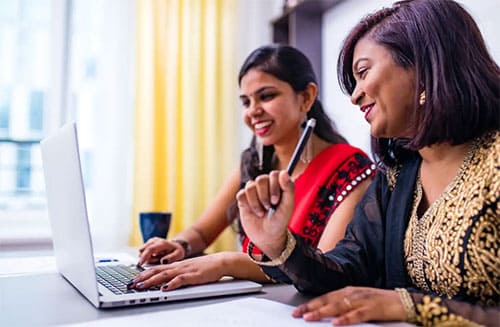
Freelancing is becoming one of the
best career choices for women in
Bangladesh because it bypasses the
worst parts of traditional work. No
commute harassment. No office
politics. No mobility restrictions.
Beginners earn 10,000 to 25,000 BDT
monthly (90 to 230 USD) if they’re
lucky and manage to find work.
Experienced freelancers can make
significantly more.
The flexibility is real.
Independence is real. But so is the
lack of job security, maternity
leave, and healthcare coverage.
What Women Actually Earn. And Why It
Matters?
Some studies say women earn more per
hour than men in Bangladesh. A 2020
UN report claimed women earn 4.7%
more than men hourly when
considering factor-weighted averages
based on education, age, and work
type.
Sounds great, right? Except when you
look at actual monthly earnings, men
earn 35.8% more per hour than women
on average, and in agriculture, this
gap widens to 57.2%. Women over 65
earn about 70% less than men the
same age.
The "reverse
wage gap"
exists only under very specific
statistical conditions. In real
life, women in the formal sector
earn an average of 21% less per hour
than men. The pay gap Bangladesh
women face is very real.
And that's just wages. Women aged 15
through 24 experience the highest
unemployment rate at 16.5%, double
that of men in the same age group.
Living on "Low" Salaries
International readers see
Bangladeshi salaries converted to
USD and wonder how anyone survives.
The answer is simple: cost of living
is lower here. Food, transportation,
housing are all cheaper in smaller
cities and rural areas.
Urban living, especially Dhaka,
creates
financial pressure
for entry-level workers. Many
families depend on combined incomes
from multiple members.
A monthly income of 20,000 BDT
(around 180 USD) can support entire
families here. It's not comfortable.
But it's survival.
For women, that income rarely stays
personal unless the family is
already filthy rich. We contribute
to family expenses, sibling
education, household necessities.
Financial responsibility
extends beyond personal needs.
Savings and personal investment are
luxuries.
Discrimination Doesn't Announce
Itself
Gender discrimination here rarely
looks like open hostility. It's the
interview questions. The promotion
delays. The hiring preferences.
Questions about marriage plans.
Questions about kids. These signal
doubts about long-term reliability.
And they're normal here.
Promotions prioritize men based on
assumptions about availability and
leadership presence. Women need
exceptional performance
to get equal recognition.
I've experienced this personally.
The eye-roll inducing "Are you
unmarried?" question during
interviews. Knowing a male candidate
would never be asked. Knowing I
can't do anything about it.
Gendered Respect in Healthcare and
Offices
Professional respect differs by
gender. Female doctors get called
nurses. Women in leadership face
resistance from subordinates and
colleagues.
Leadership remains culturally linked
to male behavior. Assertive women
get criticized for traits that get
praised in male leaders.
This creates psychological barriers.
Many women hesitate to display
authority to avoid social backlash.
Career prospects
for Bangladeshi women get limited
before they even reach senior
positions.
Authority Is Still Masculine. I've
seen this too many times to count. A
woman makes a decision, she's bossy.
A man makes the same decision, he's
“decisive.”
Cultural expectations for women
Bangladesh remain deeply traditional
even in supposedly modern
workplaces.
Safety Isn't Guaranteed Anywhere.
Workplace and Commute Safety
Concerns
Safety issues working women
Bangladesh face determine careers
here. Daily commuting exposes women
to harassment, especially on crowded
public transport.
Late hours create additional risks.
Many families discourage jobs
requiring night shifts or distant
travel.
The statistics are brutal. According
to the Bangladesh Women's Lawyers'
Association, 84% of women face
sexual harassment in public spaces,
workplaces, and educational
institutions.
A survey during COVID found that a
majority of women
employed in the formal sector
experienced some form of sexual
harassment at work during the
pandemic.
All respondents reported facing
harassment. The perpetrators are
male colleagues, supervisors,
employers, and managers.
Workplace Harassment Statistics in
Bangladesh
Between January and September 2025,
Bangladesh Mahila Parishad recorded
2,237 cases of violence against
women and girls, including 481 rapes
and 144 gang rapes. Ain o Salish
Kendra reported 151 sexual
harassment cases.
Those are just reported cases.
Social stigma, fear of retaliation,
and weak reporting systems mean
actual numbers are far
higher.
Why Silence Is Often Safer Than
Speaking Up
Speaking against harassment
threatens job security and social
reputation. Women calculate risks
before reporting incidents. Silence
becomes a survival strategy.
This reality shapes workplace
culture and career decisions. Women
employment Bangladesh statistics
don't capture this invisible
barrier.
Do Women in Bangladesh Have Real
Career Futures? Interrupted Careers
After Marriage or Motherhood
Is it hard for women to build a
career in Bangladesh? I'd say yes.
Career interruptions linked to
marriage and motherhood make
long-term growth nearly impossible
for most women.
Pregnancy becomes a
professional disadvantage.
Maternity benefits are limited in
private companies. Women leave jobs
due to lack of childcare support.
Research shows childcare
responsibilities significantly
affect maternal labor market
outcomes, including participation,
type of employment, hours worked,
and income.
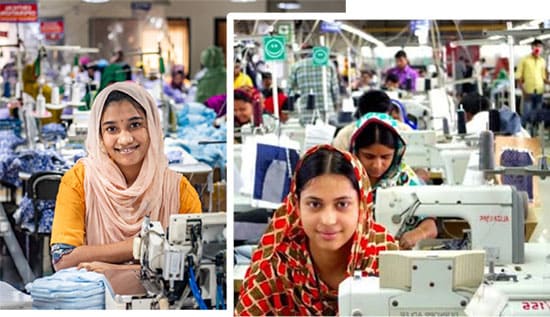
Even when factory-based daycare
exists, mothers find it difficult to
carry
children to work
since almost all walk miles to and
from the factory.
Career breaks reduce promotion
opportunities. Returning after
maternity leave remains challenging.
Long-term professional growth
requires luck, privilege, and
exceptional circumstances.
Fields With Potential vs. Dead Ends.
Technology, freelancing, healthcare,
and education offer relatively
stable prospects. These industries
continue expanding and accepting
female professionals.
Traditional industries show limited
growth. Leadership advancement
crawls in corporate and
administrative sectors.
Freelancing and remote work create
new possibilities.
Digital platforms
let women bypass mobility
restrictions and workplace
discrimination.
Hope Without Guarantees
But cultural expectations for women
Bangladesh remain sticky. Even
vocational training programs
struggle to retain female
participants after marriage. Norms
and values tend to be sticky, which
continues to obstruct women's
economic empowerment.
Workforce participation among women
continues increasing gradually.
Social
attitudes toward female
employment show visible improvement
in urban areas. But structural
challenges remain persistent.
Can Income Buy Fulfillment?
Financial contribution improves
women's decision making power within
families. Income increases respect
within
household structures.
But emotional labor remains
gendered.
Women manage family relationships,
childcare, social responsibilities
alongside professional work.Income
increases autonomy. It doesn't
eliminate obligations.
Can a woman live independently on
her income in Bangladesh?
Technically, maybe. Realistically,
rarely. Women don't live alone due
to safety concerns and social
stigma. Hostel living happens during
university. Independent living
becomes acceptable primarily after
marriage.
Independence requires systemic
support. Safe housing. Legal
protection. Cultural acceptance.
We're missing most of that.
What a "Good Life" Looks Like Here?
Fulfillment for working women in
Bangladesh often includes
financial stability,
family support, and career
satisfaction. Personal definitions
vary based on cultural values and
individual goals.
Many women prioritize family
well-being alongside professional
success. Career satisfaction alone
rarely defines happiness in
Bangladeshi society.
Why Women's Income Is Rarely Just
Theirs?
Women frequently contribute earnings
toward family expenses, sibling
education, and household
necessities. I know this personally.
As the oldest child, my income goes
toward
family needs
before my own.
Financial responsibility extends
beyond personal needs. This
expectation reduces opportunities
for savings and personal investment.
Women's income often supports
collective family advancement rather
than
individual independence.
Bangladesh vs. the West: Not a
Simple Trade-Off Structural
disadvantages are real. Safety,
mobility, workplace equality all lag
behind Western standards.
Western countries provide stronger
legal protection, workplace equality
laws, and independent living
opportunities.
The World Economic Forum's 2024
Global Gender Gap Report ranked
Bangladesh 146th globally with an
economic parity score of just 31.1%,
the lowest achieved since 2014.
Those structural advantages support
career stability in ways we don't
have access to. Community structures
provide emotional and social
support. Religious values sometimes
encourage protection and family
unity.
Support networks reduce loneliness.
They provide childcare help. These
bonds influence life
satisfaction and resilience.
We had a female president for 15
years, even if she was exiled after
the July 2024 political upheaval. We
have feminist groups advocating for
equality. Universities can be
empowering.
Power, Progress, and Contradictions
Begum Rokeya started this whole
movement and got Bangladeshi women
studying in the first place. That
legacy continues. Begum Rokeya
started this whole movement and got
Bangladeshi women
studying in the first place. That
legacy continues.
But research shows that providing
information to correct
misconceptions about
workplace safety
and societal attitudes can improve
women's short term employment
prospects. Short-term. Long term
structural change remains distant.
Working women in Bangladesh live
multiple lives. Professional and
domestic. Ambitious and acceptable.
Financially contributing but rarely
financially free.
What Does It All Come Down To?
The challenges are structural.
Workplace discrimination.
Interrupted careers. Income that
supports everyone except yourself.
The female labor force contracted
for the first time since 2010.
That's not progress.
But women are entering digital work.
Reshaping family expectations.
Slowly redefining independence
within existing systems.
The question is whether working
women here can build futures on our
own terms. With safety. Respect.
Autonomy. And the structural support
that makes careers sustainable
instead of symbolic.
Progress exists. Restriction exists.
Both are real. And we have to
balance both every single day. |